top of page

The Jury on Trial

3 hours ago
6 min read

“This tablet commemorates the courage and endurance of the jury… which established the right of juries to give their verdict according to their convictions.”


Events in a courthouse in Plymouth, Massachusetts, a few days ago remind us of what it means to have trial by jury. Lindsay Clancy was accused of killing her three young children. That much she admitted. The issue for the jury was whether postpartum psychosis had left her unable to appreciate the wrongfulness of what she was doing. After seven days of deliberation, eleven jurors were prepared to find her not criminally responsible. One held out. The judge asked them to continue; an emergency appeal was made to Massachusetts’s highest court but the deadlock remained. Outside the court, the public had already made up their mind so that the one lone dissenting juror became the target of public anger.


A juror does not sit to provide the public with the ending it expects. The juror’s sole job is to decide the case according to the evidence and the law. If twelve people cannot reach the required verdict, that is not a failure of the jury system. Quite the opposite: it is evidence that the system works. The jury is the independent decision-maker; it is up to the prosecution to prove guilt. A defendant is not required to prove their innocence. Jury disagreement can be frustrating, particularly in a case that has attracted intense public attention, but the disagreement is not a malfunction to be corrected by pressure from outside the courtroom either by the public or by the government of the day.


The same principle is at issue here in Britain. In the trial of defendants charged over the Palestine Action protest at the Elbit Systems factory in Filton, the barrister Rajiv Menon KC referred in his closing speech to Bushell’s Case, the 1670 case arising from the prosecution of William Penn and William Mead. The jurors in that case refused to convict and were imprisoned for contempt. Their eventual victory established the principle that jurors cannot be punished for the verdict they return. The episode remains one of the historical foundations of jury independence. Menon is facing contempt proceedings over what he said in what is believed to be the first time in British legal history that a lawyer is being prosecuted for contempt for words spoken during a closing speech. The case is a reminder that jury independence is not simply a historical curiosity. It still has practical consequences for the way trials are conducted.


Juries now operate in an environment that did not exist when the modern jury system took shape. Evidence which is the subject of a trial - and indicative of innocence or guilt - can be clipped, re-posted and judged by millions of people before a trial has finished. The prosecution of Fahir Amaaz (and his older brother) following events at Manchester Airport on 23 July 2024 illustrates the issue. He was convicted of three assaults in the Terminal 2 car park. A fourth allegation, involving PC Zachary Marsden, was considered by two juries that could not reach a verdict. In May 2026 the prosecution did not seek a further trial and the judge entered a verdict of not guilty on that count. This count attracted particular attention because video showed an officer kicking Amaaz in the head while he was on the ground after being tasered and the events preceding it. The footage went viral, people decided then and there what it showed and within hours thousands of others repeated the same conclusion. By the time Fahir Amaaz appeared in court, one version of the case was already fixed in the minds of many, as was his culpability.

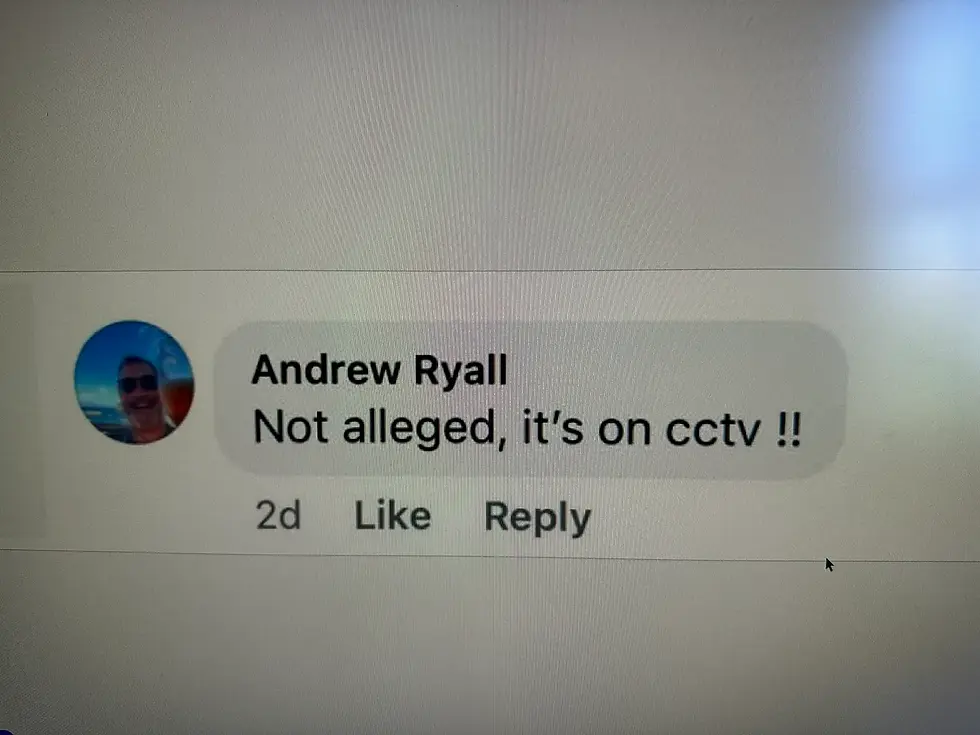


A certain cohort of the public took to social media in ways which led to an application to have the trial stopped on the basis of (un)fairness. The application was refused.


The digital age poses new challenges for the jury system. Social-media users can publish material which is instantaneous, made anonymously, copied thousands of times and viewed by people in several jurisdictions before anyone has decided whether it creates a legal problem. In the Manchester case the footage lasted less than 90 seconds but by the time it was over, the Prime Minister had commented on it. So had the then Mayor of Greater Manchester, Andy Burnham. Reform UK threatened a private prosecution. There were protests in Rochdale and Manchester. The Attorney General was asked to consider the conduct of Nigel Farage. Social media was awash with fierce arguments about policing, race, self-defence and the use of force.


This is not the only pressure on the work of the jury. This particular pressure can, and should be, resisted by protecting jurors and enforcing the rules that keep outside material out of their deliberations. The other comes from a government facing a court system that cannot keep pace with demand. Perhaps, the more serious challenge to jury trial is now coming from Parliament. The Courts and Tribunals Bill aims to clear the backlog by removing jury trials for many mid-level crimes and expanding magistrates' powers.


The government’s arguments are based on delay. The Crown Court backlog has reached unprecedented levels, leaving defendants, victims and witnesses waiting years for cases to be heard. Ministers argue that the system cannot continue to devote scarce Crown Court time and judicial resources to cases that could be dealt with more quickly elsewhere. But efficiency should not be the standard by which a criminal case should be judged. Jury trial is a safeguard precisely because it places a decision about guilt in the hands of citizens rather than leaving every contested case to the professional judiciary. Any reform that reduces the use of juries therefore needs to be judged not by the number of cases it can process, but by what is lost when the jury disappears.


There is a particular irony that as Justice Secretary, it was David Lammy who introduced the Courts and Tribunals Bill, which seeks to drastically reduce the number of jury trials by moving thousands of cases to judge-only "swift courts" or magistrates to clear a record court backlog. This directly contradicts the findings of his own landmark 2017 Lammy Review, which explicitly praised jury trials as one of the few areas in the criminal justice system free from racial bias. The review identified disparities at several stages of the process, including policing, charging, remand and sentencing. It also made an important distinction about juries: the evidence available to the review did not show the same pattern of racial disparity in jury verdicts. Lammy argued that requiring twelve people to deliberate together could expose and challenge individual prejudices in a way that a decision made by one person might not.


That finding deserves more attention in the present debate. If there are known disparities elsewhere in the criminal justice system, it is not enough to ask whether judge-only trials are faster. Parliament should also ask whether replacing juries with professional decision-makers changes outcomes for defendants from minority backgrounds. The government has indicated that the effects of the reforms will be evaluated. That work should be treated as a central safeguard, not as an afterthought.


The jury has never been a particularly efficient institution. That was never its purpose. Its value lies in the fact that a defendant facing the power and resources of the state can have guilt determined by ordinary citizens who must confront the evidence together. Sometimes they will disagree. Sometimes they will get things wrong. Sometimes, after days of argument, they will fail to reach a verdict at all. Those might be argued as weaknesses of the system. They are also reminders that the system is made up of people rather than machines.


The answer to a ‘difficult’ juror - as in the Clancy case - is not to have fewer juries. It is to decide what role citizens should continue to play in criminal justice, and to be honest about the price of removing them. A jury that refuses to give the public the verdict it wants is doing exactly what it is supposed to do.


This article represents the personal perspective of Imran Khan KC and was first published on Substack. You can read the original article here:


bottom of page